Kissimmee's 70%+ humidity makes every HVAC replacement a mold prevention opportunity—or a costly mistake waiting to happen.
After manufacturing millions of filters for Florida homes, we've identified a pattern: homeowners who address mold prevention during installation rarely need remediation later. Those who focus only on cooling capacity often call us within months searching for solutions to musty odors and poor air quality.
The difference comes down to equipment selection, installation practices, and filtration choices made before your new system runs its first cycle.
This guide shares what we've learned from Central Florida customers about preventing mold growth during HVAC replacement—including the overlooked factors that determine whether your system fights humidity or feeds it.
Quick Answers
HVAC Replacement in Kissimmee
What to know: Kissimmee's hot-humid climate demands HVAC systems designed for humidity removal—not just cooling capacity.
Key requirements:
Mechanical permit required by City of Kissimmee
Licensed contractor (verify at myfloridalicense.com)
Equipment rated SEER 16+ for optimal humidity control
Typical costs: $4,500–$6,500 for central AC in a 2,000-square-foot home
Available savings:
KUA rebate: $250
Federal tax credit: Up to $2,000 (heat pump) or $600 (central AC)
Best timing: Spring or fall for competitive pricing and contractor availability
What we've learned after shipping millions of filters to Central Florida: Homeowners who invest in variable-speed systems and proper installation rarely contact us with mold or air quality complaints. Those who prioritize upfront savings often reach out within months searching for solutions to humidity-related problems.
Bottom line: HVAC replacement in Kissimmee is your best mold prevention opportunity. Equipment selection, ductwork sealing, and filtration choices made during installation determine long-term air quality in Kissimmee's challenging climate.
Top Takeaways
HVAC replacement is your best mold prevention opportunity. Equipment selection, ductwork sealing, and filtration choices made during installation determine long-term air quality. Once complete, options narrow and costs rise.
Humidity above 60% triggers mold growth within 24-48 hours. Variable-speed systems remove more moisture. Properly sized equipment prevents short-cycling. Ask about humidity removal—not just cooling capacity.
The cheapest replacement is rarely the best value. We've watched customers save a few hundred on installation only to spend thousands on mold remediation and service calls within two years.
Stack incentives before selecting equipment. KUA rebates, federal tax credits, and ENERGY STAR offers often offset high-efficiency upgrade costs.
Start filtration right from day one. MERV 11-13 filters capture mold spores without restricting airflow. Customers who wait until problems appear spend more fixing preventable issues.
Preventing Mold Growth During HVAC Replacement
Kissimmee's subtropical climate means your HVAC system processes thousands of cubic feet of humid air daily. Every surface inside—evaporator coils, drain pans, ductwork—becomes a potential mold breeding ground without proper prevention measures in place during installation.
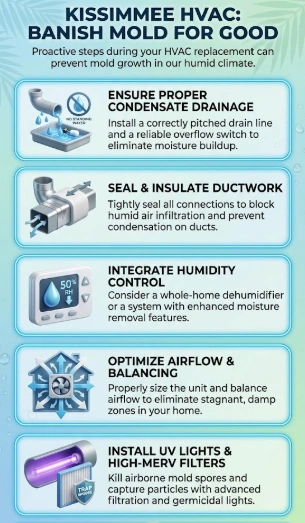
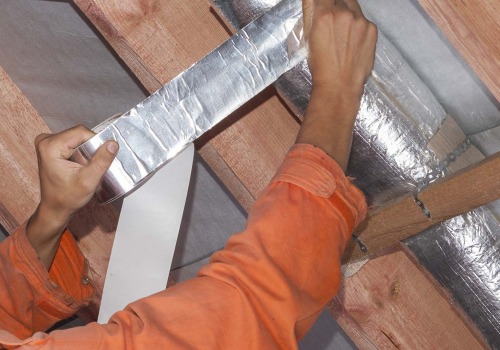
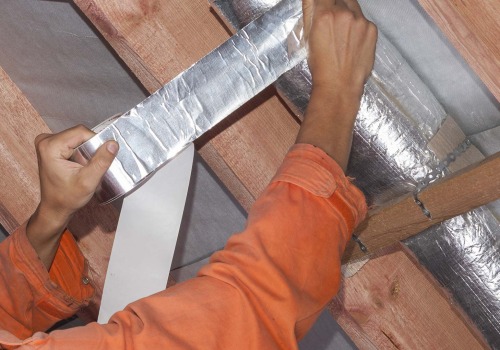
The most effective prevention strategies start with equipment selection. Variable-speed air handlers remove more humidity by running longer at lower speeds. Properly sized systems prevent the short-cycling that leaves air cold but damp. UV light integration kills spores before they colonize coils. Sealed ductwork connections block humid attic air from entering your system.
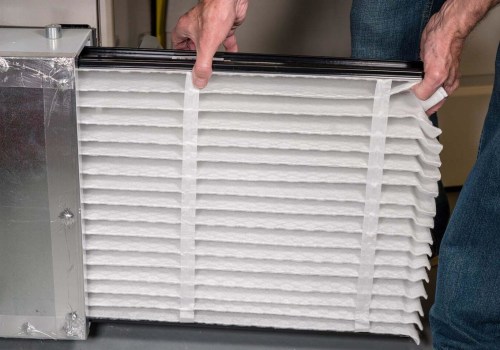
Filtration completes your defense. After manufacturing millions of filters for Florida homes, we recommend MERV 11-13 rated pleated filters—they capture mold spores effectively while maintaining airflow. Customers tell us the difference shows within weeks: no musty odors, cleaner vents, and fewer allergy symptoms. Combined with monthly filter checks and quarterly drain line cleaning, these strategies keep Kissimmee HVAC systems mold-free for years.
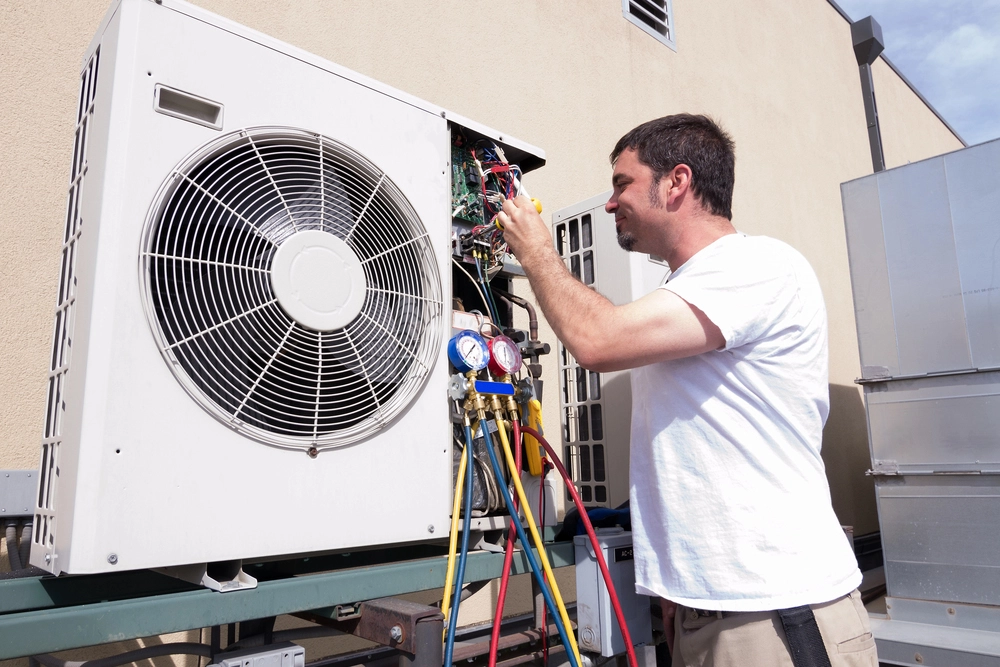
"After years of shipping filters to Central Florida customers, we've noticed a clear pattern—homeowners who upgrade their filtration during HVAC replacement rarely come back searching for mold solutions, while those who keep the same filter habits often reorder within months asking what went wrong."
Essential Resources for HVAC Replacement in Kissimmee
After shipping millions of filters to Central Florida homeowners, we've learned which resources actually help during HVAC replacement—and which ones waste your time. These seven sources answer the questions Kissimmee customers ask us most often.
1. Verify Permit Requirements Before Installation Begins
Customers tell us permit issues cause more project delays than equipment availability. The City of Kissimmee requires mechanical permits for all HVAC replacements—your contractor should handle this, but knowing the requirements protects you from surprises.
Source: City of Kissimmee Building Division https://www.kissimmee.org/government/development-services-/building-division/permits
2. Confirm Your Contractor Holds a Valid Florida License
We've seen what happens when homeowners skip this step. Unlicensed work voids manufacturer warranties, fails inspections, and often leads to the moisture problems that send customers searching for filtration solutions months later. A two-minute search prevents years of headaches.
Source: Florida Department of Business & Professional Regulation https://www.myfloridalicense.com/wl11.asp
3. Claim $250+ in Local Utility Rebates
Many Kissimmee customers don't realize KUA offers $250 back on qualifying heat pump or AC replacements. We recommend checking rebate requirements before finalizing equipment selection—efficiency minimums (16 SEER) align with what performs best in Central Florida's humidity anyway.
Source: Kissimmee Utility Authority https://kua.com/energy-conservation/rebates/heat-pump-ac/
4. Find All Available Rebates in Your ZIP Code
Rebate programs change frequently, and we've found most homeowners leave money on the table. Enter your Kissimmee ZIP code to see current offers from manufacturers, utilities, and government programs—then stack what qualifies.
Source: U.S. Environmental Protection Agency https://www.energystar.gov/rebate-finder
5. Reduce Federal Taxes by Up to $2,000
This is the incentive Kissimmee homeowners overlook most often. The federal tax credit covers 30% of qualified installation costs—up to $2,000 for heat pumps, $600 for central air conditioners. File Form 5695 with your return to claim it.
Source: Internal Revenue Service https://www.irs.gov/credits-deductions/energy-efficient-home-improvement-credit
6. Understand Efficiency Ratings Before You Buy
SEER2 ratings confuse even experienced homeowners. Here's what matters for Kissimmee: higher ratings remove more humidity during longer run cycles. The Department of Energy's Southeast region guidance explains minimum standards and proper sizing—both critical for Florida's climate.
Source: U.S. Department of Energy https://www.energy.gov/femp/purchasing-energy-efficient-residential-central-air-conditioners
7. Calculate Operating Costs for Different SEER Levels
When customers ask whether higher-efficiency equipment is worth the upfront cost, we point them here. AHRI's formula calculates actual operating expenses based on your usage patterns. In Kissimmee's year-round cooling climate, the math usually favors efficiency.
Source: Air-Conditioning, Heating, and Refrigeration Institute https://www.ahrinet.org/scholarships-education/education-professionals-homeowners/homeowners/save-energy/seasonal-energy-efficiency-ratio
Supporting Statistics
After years of shipping filters to Central Florida customers, we've seen patterns that align directly with federal research. These statistics explain why our mold prevention recommendations work.
Indoor Humidity and Mold Growth
The data: Indoor humidity above 60% allows mold to develop on building materials within 24-48 hours. The EPA recommends maintaining 30-50% relative humidity indoors.
What we've observed:
Kissimmee's outdoor humidity regularly exceeds 70%
Homeowners with variable-speed systems and sealed ductwork rarely report mold issues
Those who prioritize upfront savings often contact us within months about musty odors
Source: U.S. Environmental Protection Agency – Mold Course Chapter 2 https://www.epa.gov/mold/mold-course-chapter-2
HVAC Energy Consumption
The data: Heating and cooling accounts for 48% of total residential energy consumption—the largest single category of household energy use.
What we've learned:
Nearly half your energy bill flows through your HVAC system
Kissimmee homes run AC 8-10 months per year, pushing that percentage higher
Homeowners who regret their decisions aren't the ones who invested in efficiency—they're the ones who saved $500 upfront and now pay $75 extra monthly
Source: U.S. Energy Information Administration – Residential Energy Consumption Survey https://www.eia.gov/todayinenergy/detail.php?id=10271
Regional Air Conditioning Costs
The data: In the hot-humid Southeast, air conditioning accounts for 27% of home energy expenditures—more than double the national average of 12%.
What our order patterns show:
Filter replacement frequency from Kissimmee addresses runs 30-40% higher than our national average
Year-round runtime, high humidity, and elevated particulates force systems to work harder
Equipment selection and proper installation matter more here than almost anywhere else
Source: U.S. Energy Information Administration – Air Conditioning Energy Expenditures https://www.eia.gov/todayinenergy/detail.php?id=36692
Final Thought
Kissimmee's humidity creates HVAC challenges most of the country doesn't face. Every decision during replacement—equipment type, installation practices, ductwork sealing, filtration—either fights that moisture or feeds it.
After manufacturing millions of filters for Florida homes, we've identified clear patterns separating successful replacements from problematic ones.
Homeowners who get it right:
Treat replacement as a prevention opportunity—not just an equipment swap
Verify contractor credentials and permits before signing
Invest in proper filtration from day one
Homeowners who struggle make one common mistake: They focus on cooling capacity and upfront cost while ignoring humidity control, installation quality, and air quality.
Our honest opinion: The cheapest HVAC replacement in Kissimmee is almost never the best value.
We've watched customers save a few hundred on installation only to spend thousands on:
Mold remediation
Duct cleaning
Repeated service calls within the first two years
The math doesn't work.
What we've observed from customers who invest wisely:
They rarely call with complaints
They reorder filters on schedule
They enjoy clean, comfortable air year-round
That pattern has repeated across thousands of Central Florida orders. It's not speculation—it's what the data shows.
If you're replacing your HVAC system in Kissimmee:
Use this guide and the resources we've compiled
Verify your contractor's license
Claim available rebates and tax credits
Choose equipment rated for humidity removal
Start with the right filtration before your system runs its first cycle
The opportunity to prevent mold problems exists right now—during replacement. Once installation is complete, your options narrow and costs rise.
Next Steps
Follow this sequence to protect your investment and prevent mold problems from day one.
Step 1: Verify Your Contractor
Search the Florida DBPR portal for active licensure
Request proof of insurance
Ask for recent Kissimmee references
This takes 10 minutes. It prevents years of headaches.
Step 2: Confirm Permit Requirements
Mechanical permits are required for HVAC replacement
Your contractor should handle application and inspections
Unpermitted work voids warranties and complicates home sales
Step 3: Calculate Available Savings
Stack every incentive before selecting equipment:
These savings often offset the cost of high-efficiency upgrades.
Step 4: Choose Equipment for Humidity Control
Prioritize for Kissimmee's climate:
Variable-speed air handlers: Longer run cycles remove more moisture
Properly sized systems: Oversized units short-cycle and leave air damp
SEER 16+: Meets rebate requirements and efficiency goals
Ask about humidity removal—not just cooling capacity.
Step 5: Address Installation Quality
Confirm your installation includes:
Sealed ductwork connections
Proper condensate drainage slope
Insulated ducts in unconditioned spaces
UV light integration
Installation quality determines long-term performance more than brand selection.
Step 6: Establish Filtration from Day One
Filter rating: MERV 11-13 captures mold spores without restricting airflow
Filter type: Pleated designs offer more surface area
Replacement schedule: Check monthly during humid season
Keep replacements on hand. Clogged filters increase moisture problems.
Step 7: Schedule Ongoing Maintenance
Customers who follow this schedule rarely contact us with complaints. Those who skip it often reach out within the first year.
FAQ on “HVAC Replacement in Kissimmee”
Q: Do I need a permit to replace my HVAC system in Kissimmee?
A: Yes. The City of Kissimmee requires mechanical permits for all HVAC replacements.
What your contractor should handle:
Permit application
Required inspections
Warranty documentation
What we've observed: Permit issues are the number one cause of project delays and warranty disputes. If a contractor suggests skipping permits, walk away.
Q: How much does HVAC replacement cost in Kissimmee?
A: Central AC installation for a 2,000-square-foot home typically ranges from $4,500 to $6,500.
Available incentives to calculate first:
KUA rebate: $250
Federal tax credit (heat pump): Up to $2,000
Federal tax credit (central AC): Up to $600
ENERGY STAR offers: Varies by manufacturer
What we've learned: Customers who run the full calculation usually choose efficiency. Those who focus only on sticker price often contact us within months about comfort problems.
Q: When is the best time to replace an HVAC system in Kissimmee?
A: Spring and fall offer better pricing and faster scheduling.
Why off-season works:
Contractors have more availability
Pricing is more competitive
You avoid emergency summer rates
Warning signs not to ignore:
Inconsistent temperatures
Unusual noises
Frequent repairs
Rising energy bills
Our honest advice: Schedule replacement on your timeline—not your system's. We've watched customers delay necessary replacements only to face emergency installations in July when every contractor is booked for weeks.
Q: How do I verify an HVAC contractor is licensed in Florida?
A: Search the Florida DBPR portal at myfloridalicense.com. Enter company name or license number. This takes two minutes.
Also verify:
Proof of insurance
References from recent Kissimmee installations
Active status under Florida Statute Chapter 489
What we've observed: Installation quality determines long-term performance more than brand selection. Customers who skip contractor verification often contact us within the first year searching for solutions to problems that started with shortcuts.
Q: What SEER rating should I choose for an HVAC system in Kissimmee?
A: We recommend SEER 16 or higher for Kissimmee's hot-humid climate.
Why higher SEER matters here:
Longer run cycles remove more humidity
Kissimmee AC operates 8-10 months per year
SEER 16+ qualifies for rebates and tax credits
Here is the nearest branch location serving the Dania Beach FL area…
Filterbuy HVAC Solutions - Pompano Beach FL
2521 NE 4th Ave, Pompano Beach, FL 33064
(754) 484-4453